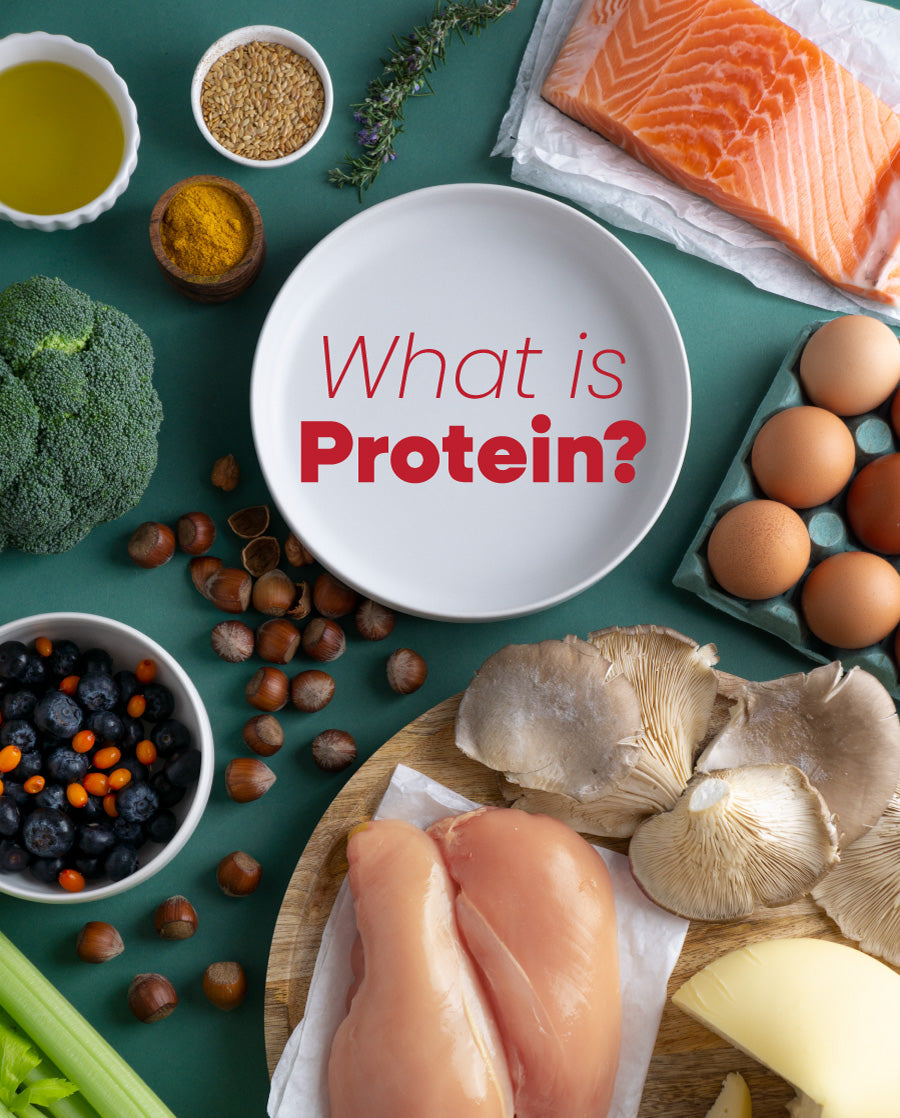
First, What Even Is Protein?
Before we talk numbers, let's get clear on what protein actually is in the simplest possible terms.
Protein is one of three main things your body uses for energy and building material (the other two are carbohydrates and fat). The difference is that protein is the one your body uses to build and repair things — your muscles, yes, but also your skin, your hair, your immune cells, your hormones, and more.
Think of it like the bricks of a building. Carbs and fat are your energy (the electricity and water that keeps the building running), but protein is the actual structure. Without enough bricks, things start to fall apart.
So How Much Do You Actually Need?
Here's the honest answer: it depends on your weight and how active you are.
But don't worry — the calculation is simple.
For the average Malaysian adult who exercises lightly or not at all:
Around 0.8g to 1.0g of protein per kilogram of body weight per day.
For someone who exercises regularly (3–5 times a week):
Around 1.2g to 1.6g per kilogram of body weight per day.
For someone training hard (daily workouts, running, gym):
Around 1.6g to 2.0g per kilogram of body weight per day.
Let's make this real with examples:
| Your weight | Not very active | Moderately active | Very active |
|---|---|---|---|
| 50kg | 40–50g/day | 60–80g/day | 80–100g/day |
| 60kg | 48–60g/day | 72–96g/day | 96–120g/day |
| 70kg | 56–70g/day | 84–112g/day | 112–140g/day |
| 80kg | 64–80g/day | 96–128g/day | 128–160g/day |
What Does That Actually Look Like in Food?
Here's a rough guide to help you picture it:

- 1 large egg = 6g - 7g protein
- 1 palm-size piece of chicken breast = 25–30g protein
- 1 glass of milk (250ml) = 8g protein
- 1 can of tuna (drained) = 25g protein
- 3 tablespoons of peanut butter = 12g protein
- Half a block of tofu = 10g protein
- 1 cup of cooked lentils = 18g protein
So if you're a 65kg person who exercises a few times a week, your target might be around 80–100g of protein per day. That's roughly:
- Breakfast: 2 eggs = 12g
- Lunch: chicken with rice = 30g
- Dinner: fish with tofu = 25g
- Snack: a handful of nuts = 10g
Total: about 77g. You'd be close. Add one more egg somewhere and you're there.
Most Malaysians Are Falling Short Without Knowing It
Research consistently shows that most Southeast Asian adults don't hit their daily protein targets. The reason isn't that Malaysian food is low in protein
it's that our typical eating patterns are carbohydrate-heavy by default.

Roti canai + teh tarik for breakfast = mostly carbs, very little protein.
Nasi lemak with just sambal and ikan bilis = decent start, but still not much.
Economy rice with 3 vegetable dishes = again, mainly carbs.
It's not about eating less of the foods you love. It's about knowing which choices within those meals bump up your protein.
(We'll cover exactly how to do that with Malaysian food in the next article.)
One More Thing:
Protein Is Not Just for Gym People
This is the biggest misconception.
Your body uses protein for everything.
Your hair grows from protein.
Your skin repairs itself with protein.
Your immune system is made of protein.
You need it whether you're training for a marathon or just sitting at your office desk.
The gym version is just a more extreme end of the same spectrum.
Your Quick Takeaway
🐺 The simple rule:
Aim for at least 1g of protein per kg of your body weight per day as a starting point. That's your baseline.Once you know your number, the next step is figuring out how to hit it — using the food you already eat every day.